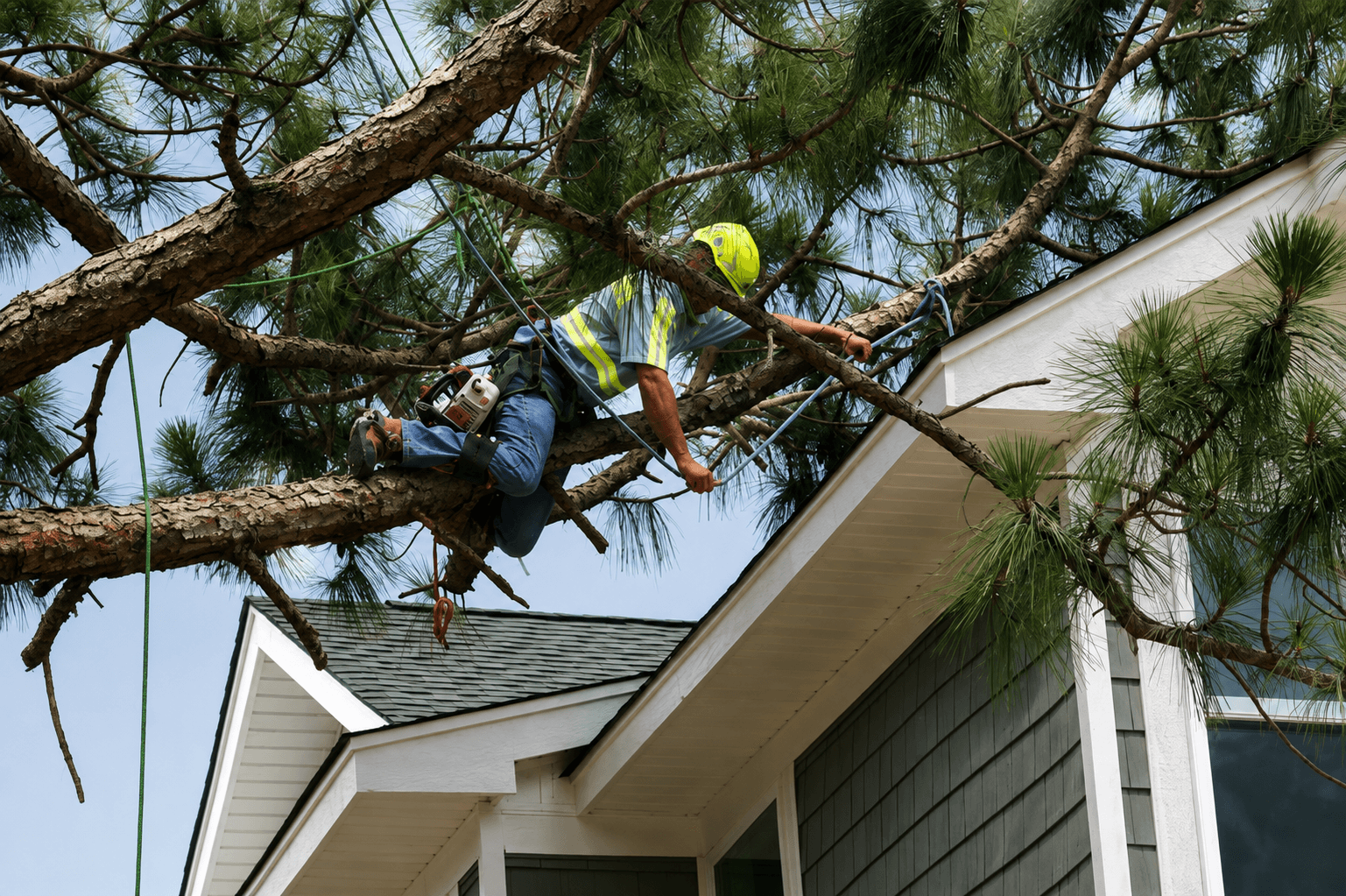
Tree assessment is not about declaring a tree safe or unsafe. It is a structured look at the tree, the site, the targets, and the changes that matter.
What an assessment can and cannot tell you
A tree risk assessment considers more than whether a trunk looks healthy. A systematic review looks at the tree, the site, foreseeable weather, the parts that could fail, and the people or property that could be affected. The level of detail should match the question: a broad walk-through of many trees is different from a focused assessment of one high-consequence tree.
No inspection can guarantee that a tree will not fail. Trees are living structures exposed to variable weather, hidden defects, and changing site conditions. The value of an assessment is that it organizes observable information, identifies meaningful concerns, and supports proportionate options such as monitoring, pruning, moving a target, restricting access, additional testing, or removal.
1. A new lean or movement at the root plate
Many trees grow with a lean and remain stable for decades. What deserves attention is change: a lean that appeared or increased recently, lifted soil, cracking around the base, exposed roots that were not previously visible, or a new gap between the trunk and soil. These observations are especially important after high wind, prolonged rain, flooding, or nearby excavation.
Do not stand beneath the canopy trying to measure the lean if the tree has moved recently. Keep people, vehicles, and pets out of the likely fall area and arrange a prompt assessment. Photos taken from a safe distance, including older photos that show the previous position, can help establish whether movement is new.
2. Cracks, splits, cavities, or changing branch unions
A crack is not evaluated by appearance alone. Its location, orientation, depth, length, movement, and relationship to major stems all influence its significance. A cavity or area of decay also requires context: the amount and distribution of remaining sound wood, the load above it, the tree's response growth, and the targets below all matter.
Watch for fresh wood fibers, newly opened seams, bark pushed outward, a branch union that appears wider after wind, or recurring debris beneath the same attachment. A photograph can document change over time, but probing, drilling, filling, or cutting into a suspected defect should be left to a qualified professional using an appropriate assessment method.
3. Sudden or uneven canopy decline
Normal seasonal leaf drop is different from a rapid change in density, color, or twig growth. Widespread dieback, a dead top, one side of the crown declining, unusually small leaves, premature color, or a marked difference from similar nearby trees can indicate stress worth investigating.
Canopy symptoms do not identify a cause by themselves. Root injury, grade changes, water stress, salt exposure, insects, disease, trunk damage, and normal species behavior can produce overlapping signs. Useful context includes when the change began, whether drainage or irrigation changed, recent storms or construction, and photographs from the same season in prior years.
4. Root-zone disturbance, even when the crown still looks normal
Tree roots extend well beyond the trunk, and many of the roots responsible for water and nutrient uptake occupy the upper soil. Trenching, new utilities, driveway work, grade changes, fill, soil removal, repeated vehicle traffic, material storage, and altered drainage can injure roots or compact the soil they depend on.
The canopy may not show the full effect immediately. A tree can use stored energy and existing foliage while root function declines. If significant site work occurred near a valuable tree, document where soil was cut, filled, or compacted and request an assessment before symptoms become severe. Earlier intervention usually preserves more options.
5. The site or the targets have changed
Tree risk is partly about consequence. The same branch has a different significance over an unused natural area than over a bedroom, parking space, pool, playground, or primary access route. A new structure, a relocated play area, increased occupancy, or changes in how a property is used can justify reviewing trees that were previously lower priority.
Exposure can change too. Removing nearby trees may alter wind loading. Clearing understory or changing drainage may affect soil conditions. A tree that has not visibly changed can still deserve a closer look because the environment around it has changed.
What information helps before the visit
Send a wide photo showing the entire tree and its surroundings, closer photos of the concern taken only from a safe location, the property address, and a brief timeline. Note recent storms, construction, excavation, flooding, lightning, neighboring tree removal, or changes in occupancy. Older photos can be especially valuable for comparing lean, canopy density, or site conditions.
Identify the decision you need to make. Are you deciding whether an area can remain open, whether pruning could address a concern, whether a project can proceed near the tree, or whether removal should be considered? A clear decision question helps the arborist recommend the right level of assessment and the most useful deliverable.
What a useful recommendation looks like
A strong recommendation connects the observation to an action. It should distinguish immediate site controls from longer-term work, identify assumptions and limitations, and explain whether monitoring or additional investigation is warranted. It should also consider options other than tree removal when they reasonably address the concern.
For owners and managers, the practical output may include marked priorities, photos, a defined pruning or removal scope, a monitoring interval, or coordination instructions. The goal is not a dramatic label. It is a defensible plan that helps people use the property responsibly while retaining the benefits of trees when that is practical.
When to keep your distance
Treat recent root-plate movement, a suspended broken limb, a visibly opening split, a tree resting on another tree, or contact with an overhead line as urgent conditions. Keep people and vehicles away from the potential fall zone. Do not pull on hanging branches, climb the tree, or attempt to move material under tension.
For any tree or branch contacting electrical infrastructure, contact the utility owner and do not approach the area. Electrical conductors may energize the tree, equipment, fencing, vehicles, or the surrounding ground. Qualified coordination must occur before tree work begins.