Outer Banks tree care is shaped by wind, salt, sandy and modified soils, drainage, storms, development patterns, utility exposure, seasonal occupancy, and access that can change from one community to the next.
The coast creates a set of interacting conditions
Outer Banks trees live with wind, salt, shifting moisture, sandy or filled soils, storm surge, shallow groundwater in some locations, heat, and intense development pressure. No single condition explains every tree problem. A useful assessment considers how those conditions interact with species, tree history, root space, targets, and property use.
Two properties a short distance apart can require different management. An exposed oceanfront site, protected soundside lot, wooded mainland parcel, commercial corridor, and historic live-oak property may differ in salt exposure, drainage, soil, wind, access, and occupancy. Local service should not mean applying one prescription to an entire region.
Wind exposure changes with development
Trees adapt to the wind and competition present while they grow. Clearing nearby vegetation, removing a neighboring tree, adding a building opening, or changing the edge of a stand can alter loading on retained trees. The effect depends on tree form, root condition, species, direction of exposure, and the surrounding group.
Before clearing or removing multiple trees, consider what will remain. A tree that was sheltered within a stand may become the new edge tree. Phased work, group retention, or a different access route may reduce abrupt changes. Post-work reassessment is especially useful after major site alterations.
Salt injury can come from several directions
Salt spray can affect foliage and buds, while storm surge or saline water can affect soil and roots. Exposure varies with distance, elevation, barriers, wind, rainfall, flooding duration, drainage, and species tolerance. Browning after a coastal event should be documented and evaluated in context rather than diagnosed from color alone.
Management may include monitoring, soil or water testing, careful irrigation decisions, removal of deposited debris, and avoiding unnecessary additional stress. Heavy fertilization is not a universal recovery treatment. The correct response depends on what the site and tree actually experienced.
Sandy soil can still be compacted and constrained
Property owners often assume sand cannot compact. Equipment traffic and repeated access can still reduce pore space and root function, especially where sand is mixed with finer material, organic layers, fill, or construction debris. Driveways, parking, patios, pools, foundations, and utility corridors can leave trees with limited usable soil.
Protect root areas from staging and parking. Where new work is planned, review grade, drainage, trenching, and access before layout is final. Improving the visible surface after construction does not reverse major root loss or deep soil compaction.
Community form changes the work plan
Dense neighborhoods can combine narrow roads, rental turnover, overhead conductors, limited parking, small yards, neighboring structures, and high seasonal occupancy. Technical work may need controlled lowering, smaller equipment, temporary parking coordination, or careful scheduling around guests and traffic.
More wooded communities and mainland properties may provide space but introduce long driveways, soft access, wetlands, larger debris volumes, or complex boundaries. Commercial and municipal sites add public access, documentation, stakeholder, and scheduling requirements. The equipment and crew should fit the site rather than force the site to fit the equipment.
Live oaks deserve objective-driven pruning
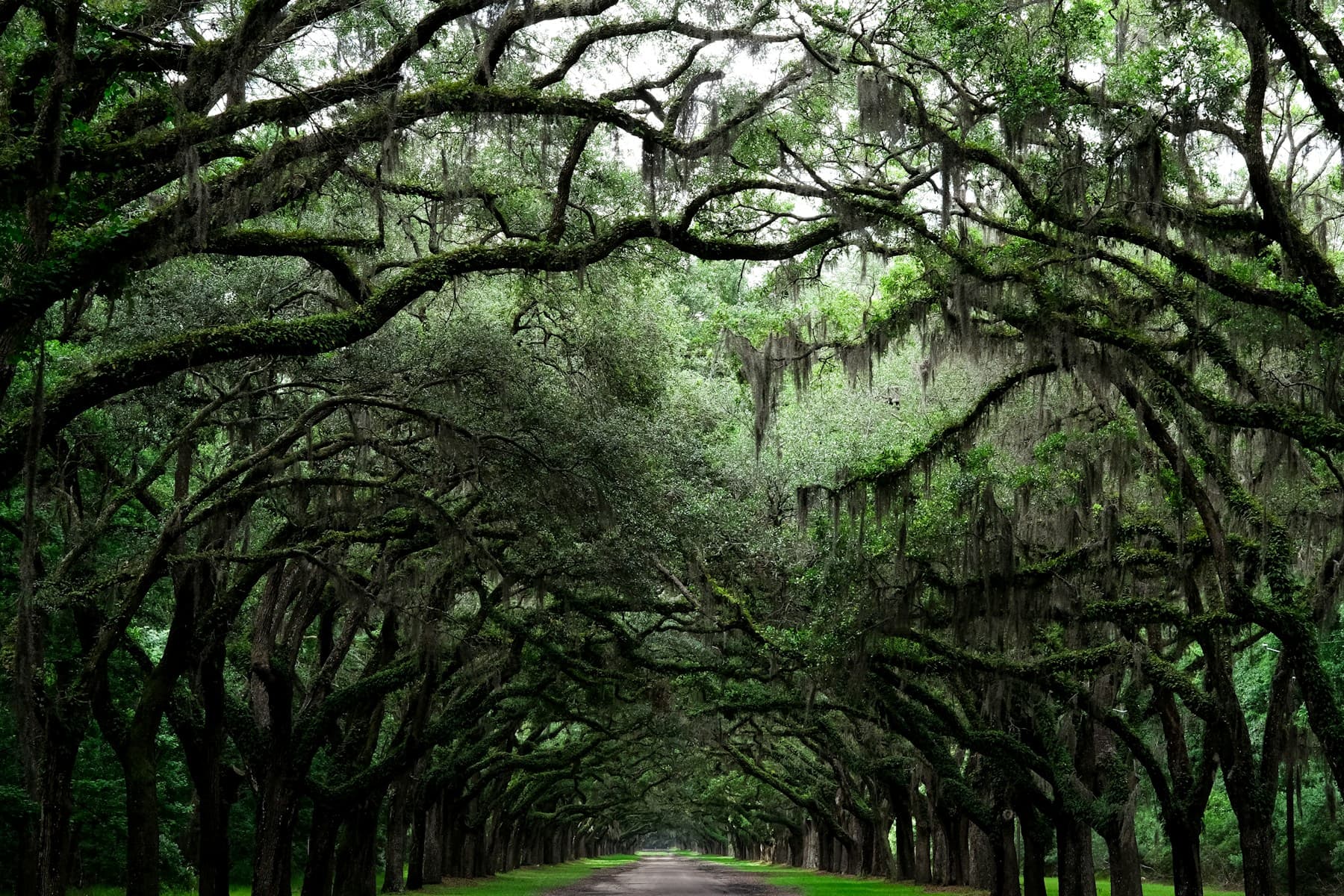
Mature live oaks are valued for shade, form, habitat, and coastal character. Custom pruning should begin with a defined objective such as clearance, deadwood, structural improvement, or reducing a specific overextended limb. Removing foliage simply to create a lighter-looking canopy can reduce value and increase stress.
Large old trees may contain cavities, old wounds, complex unions, and habitat features that require context. Those observations do not automatically support removal. Site targets, likelihood of failure, possible mitigation, and the owner's goals should guide the decision.
Storm readiness is local and property-specific
Prepare before the forecast becomes urgent. Prioritize trees near occupied structures, primary access, parking, and utilities, especially when there are recent changes or known concerns. Remote owners should establish access, approval authority, and documentation before evacuation or service interruptions.
After a storm, electrical hazards and unstable suspended material require distance and qualified response. A tree that looks dramatic in a photograph may not be the highest priority, while a less visible condition above an entry may deserve prompt attention. Triage should reflect consequence and actual site conditions.
Use service-area knowledge without making assumptions
Advanced Tree serves the Outer Banks and a broader regional radius that includes northeastern North Carolina and southeastern Virginia. Local experience helps with logistics, tree patterns, exposure, access, and storm response, but every recommendation still needs property-specific evidence.
When requesting service, share the community, exact property location, access limits, utility concerns, occupancy, tree changes, and project goals. The more accurately the site is described, the better the company can prepare the right assessor, equipment, and next step.