Careful residential tree work begins with a property plan that connects the objective, tree, crew, equipment, drop zone, access, landscaping, utilities, neighbors, cleanup, and final condition.
Define the objective before choosing the method
Pruning and removal are not interchangeable services, and neither should begin with equipment selection. The first question is what outcome the property needs: safer clearance, removal of dead or damaged material, improved structure, reduced conflict, retention of a valuable tree, emergency stabilization, complete removal, or preparation for another project.
A clear objective prevents unnecessary cutting. It also helps the arborist explain what will remain, what the treatment can accomplish, and which limitations will continue. For example, pruning a branch may address a roof conflict but cannot reverse severe root damage. Removal may eliminate one tree concern while changing shade and wind exposure for the rest of the yard.
Walk the entire work zone
Before work, identify the tree, buildings, roofs, vehicles, glass, fences, patios, pools, play equipment, landscape beds, irrigation, septic areas, overhead and underground utilities, neighboring property, pedestrian routes, and available landing or processing zones. Site protection depends on what is present and how the property is used.
Mark fragile or hidden features and correct assumptions. A crew cannot protect an unmarked shallow drain, invisible irrigation line, undocumented septic component, or disputed boundary with certainty. The owner and contractor should decide which areas can support equipment and which must remain excluded.
Match access and equipment to the site
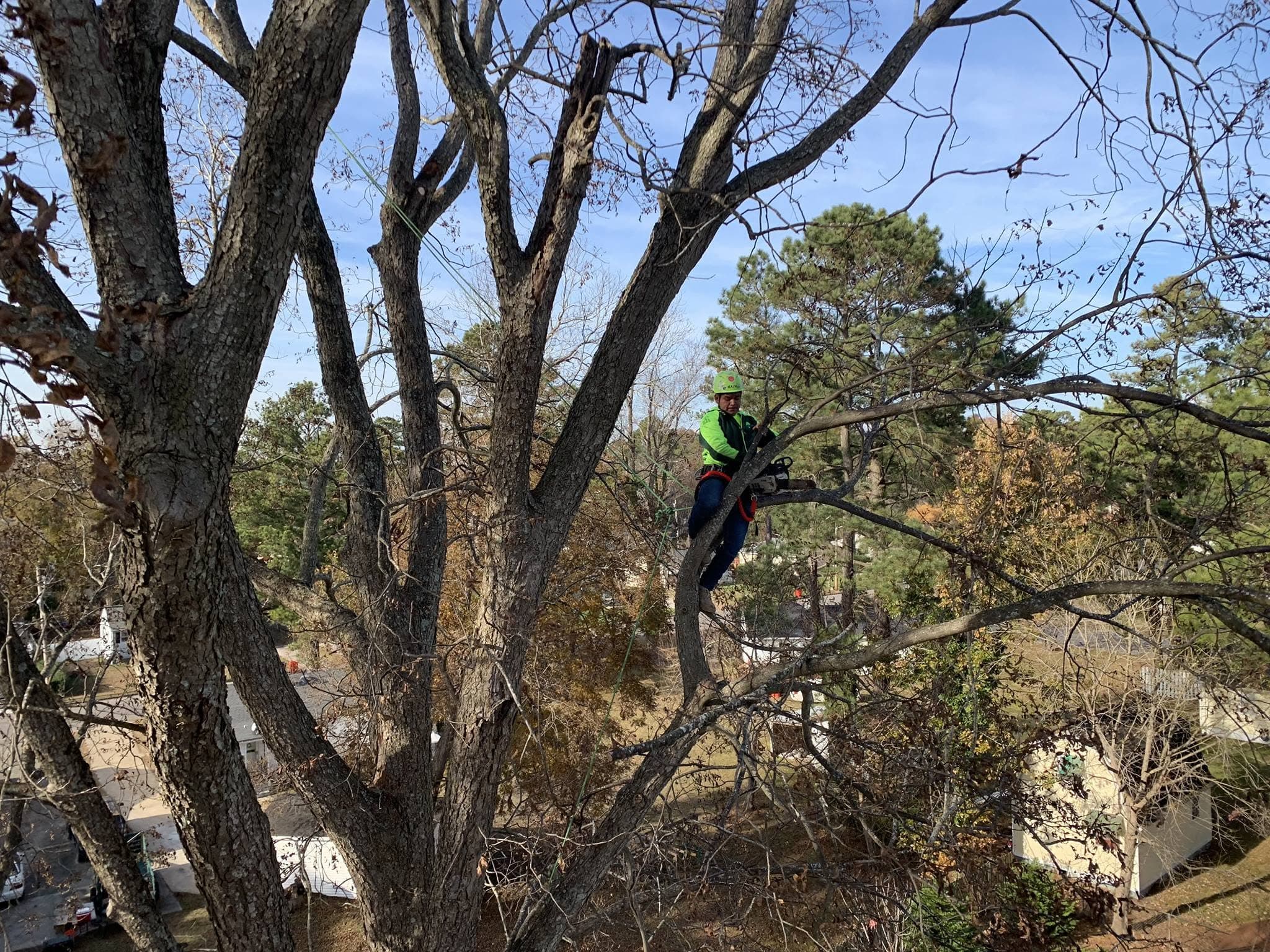
Climbing, aerial lifts, cranes, compact loaders, chippers, stump grinders, mats, and hand labor each solve different problems. The largest machine is not automatically the safest or least disruptive method. Reach, tree condition, ground bearing, gate width, overhead clearance, traffic, setup space, controlled movement, and debris volume all shape the plan.
Ask where equipment will enter, turn, set up, and exit. Confirm how turf, paving, curbs, drainage, roots, and landscape beds will be handled. Weather can change access; ground that supported a small vehicle during the estimate may be unsuitable after heavy rain.
Control the drop zone and movement of material
Branches and trunk sections can fall, swing, roll, bounce, split, or release stored tension. A professional plan establishes work zones, communication, escape paths, rigging points, lowering methods, and roles before cutting. Property owners, children, pets, tenants, and neighbors must remain outside controlled areas.
Where free fall would damage property, material can often be lowered or lifted in controlled pieces. That method still requires space, sound anchor choices, compatible equipment, and trained workers. No method removes all risk, which is why planning and exclusion zones remain essential.
Plan around roofs, landscaping, and neighboring property
Roof protection may involve rigging, temporary covers, debris management, limited access, or changing the work sequence. Landscape protection may involve mats, plywood, hand removal, smaller pieces, or accepting defined disturbance so a larger hazard is not created elsewhere. The intended level of protection should be reflected in the scope and price.
Branches and roots do not respect property lines, but contractors do. Confirm ownership and access before authorizing work. Do not assume a neighbor's driveway, yard, or tree can be used. If boundary or ownership is uncertain, resolve that question before cutting.
Pruning should preserve the future canopy
Qualified pruning uses appropriate cuts and a defined objective. Removing too much live foliage, topping, leaving long stubs, making flush cuts, or stripping interior branches can create stress, decay pathways, weak regrowth, sun exposure, and recurring maintenance. The finished tree should not merely look smaller.
Ask which limbs or canopy areas will be addressed and why. Clearance should account for branch growth and movement while respecting tree structure. Mature-tree work is often selective because a small number of well-chosen cuts can accomplish more than widespread cutting.
Removal and stump work need separate decisions
A removal scope should identify how the tree will be dismantled, whether wood and chips are hauled, what height the stump will remain, and how surrounding property will be protected. Stump grinding usually removes material below grade within a defined area, while excavation can involve deeper roots, more soil disturbance, and underground conflicts.
Clarify whether grindings are removed, whether clean soil is added, and whether seed, sod, planting, hardscape, or full restoration is included. The future use of the location determines how much stump and root work is appropriate.
Close out the job with a property review
Review completed work, debris handling, access areas, landscape impacts, remaining stumps, and any changes from the proposal. Confirm follow-up involving watering, monitoring, plant health care, replacement planting, or reassessment. Photograph significant work when documentation matters for a remote owner or managed property.
A careful company should be willing to explain the final condition and what the owner should watch next. Property protection is not only avoiding visible damage on work day. It is completing the intended objective without creating preventable future problems.